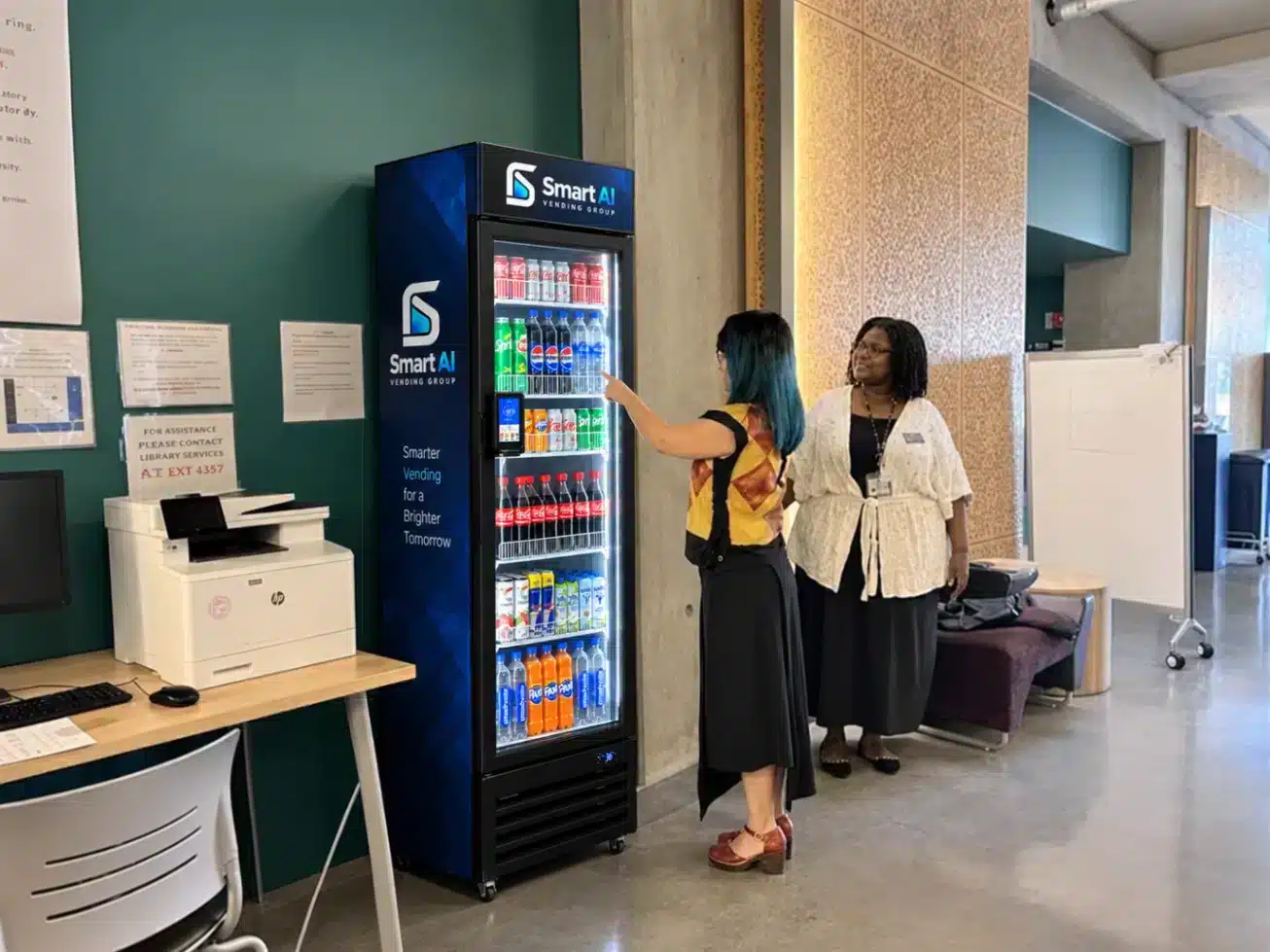
The machine has to work with the site as well as the products. Check space, access, power, connectivity and restocking before you choose your equipment.
Knowing where the machine will go makes it easier to choose the right size, capacity and storage temperature. Consider the proposed position, delivery access, available space, power requirements, the products you plan to sell and likely demand.
Electrical equipment used at work should also form part of the site’s normal safety arrangements. Safety Executive’s electrical equipment guidance provides a UK reference for workplace electrical safety.
Check that the machine footprint suits the space available for normal use.
Door Widths
Make sure the equipment can pass through every access point.
Access Route
Follow the route from the delivery point to the final position.
Lifts or Stairs
Identify lifts, stairs, ramps and other level changes on the route.
Final Placement
Choose a position that allows practical day-to-day access.
Power Supply
Confirm the electrical requirements of the selected machine.
Internet or 4G
Connected functions need suitable network access at the position.
Ventilation
Check the placement requirements specified for the equipment.
Indoor Placement
Confirm the environment suits the machine you are considering.
Restocking Access
Allow access for regular product loading and routine operation.
Product Storage
Plan where replacement stock is kept and how often to refill.
Site Approval
Understand landlord, facilities or internal site requirements.
Measure for the Machine and the Route
Measure the final position and the whole delivery route. Allow room to open the machine’s door, for customers to use it and for restocking without blocking surrounding displays or movement through the space. Provide the narrowest doorway, corridor turns and any lift dimensions before delivery is arranged. Larger cabinets need an access-led assessment, including loading arrangements and service clearance.
SandStar dimensions are manufacturer references. Check them against the UK installation specification before site sign-off.
Prepare Power and Connectivity in Advance
Confirm the electrical requirements of the selected machine before delivery, and have the power supply, connectivity and final placement area ready before it arrives. Electricity is also a running cost. As a guide, HAHA publishes approximate energy use of 2.0 kWh per 24 hours for the Mini 360, 2.65 kWh for the Pro 542, 6.2 kWh for the Ultra 1200 and 8.33 kWh for the Freezer 550.
Coffee machines also need a suitable water supply, any water treatment and waste arrangements, as well as power.
Send us the proposed location, the measurements of the route and position, and the products you want to sell. We'll help you confirm which machines suit your site before you order.