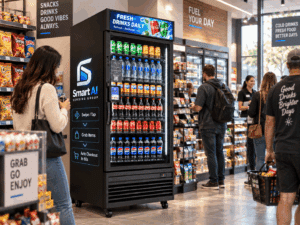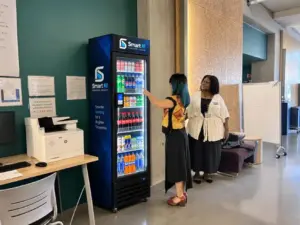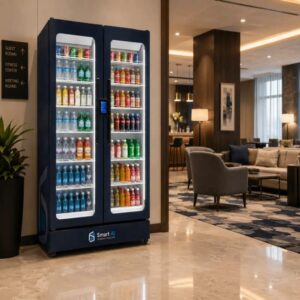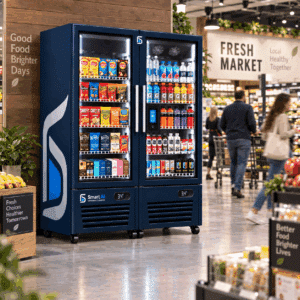

How do smart vending machines work? In short, you unlock the door with a contactless card, phone or app, take what you want, and close the door. Cameras, weight sensors or both work out which products left the shelf, and your card is charged automatically for exactly those items. Behind the scenes, the machine sends sales and stock data to a cloud dashboard so the operator knows what to restock and when.
That simple flow hides a surprising amount of technology. This guide explains each part in plain English, so you can judge whether a smart AI vending machine suits your office, hotel, campus or retail site.
Key Takeaways
- Smart vending machines use a ‘tap, take and go’ flow instead of spiral coils and keypads.
- AI cameras, weight sensors or a mix of both identify what each customer takes.
- Payment is cashless: a pre-authorisation on tap, then a final charge for the items removed.
- Telemetry sends live sales, stock and temperature data to an app or web dashboard.
- The right technology depends on your products, footfall and site security.
How Do Smart Vending Machines Work, Step by Step?
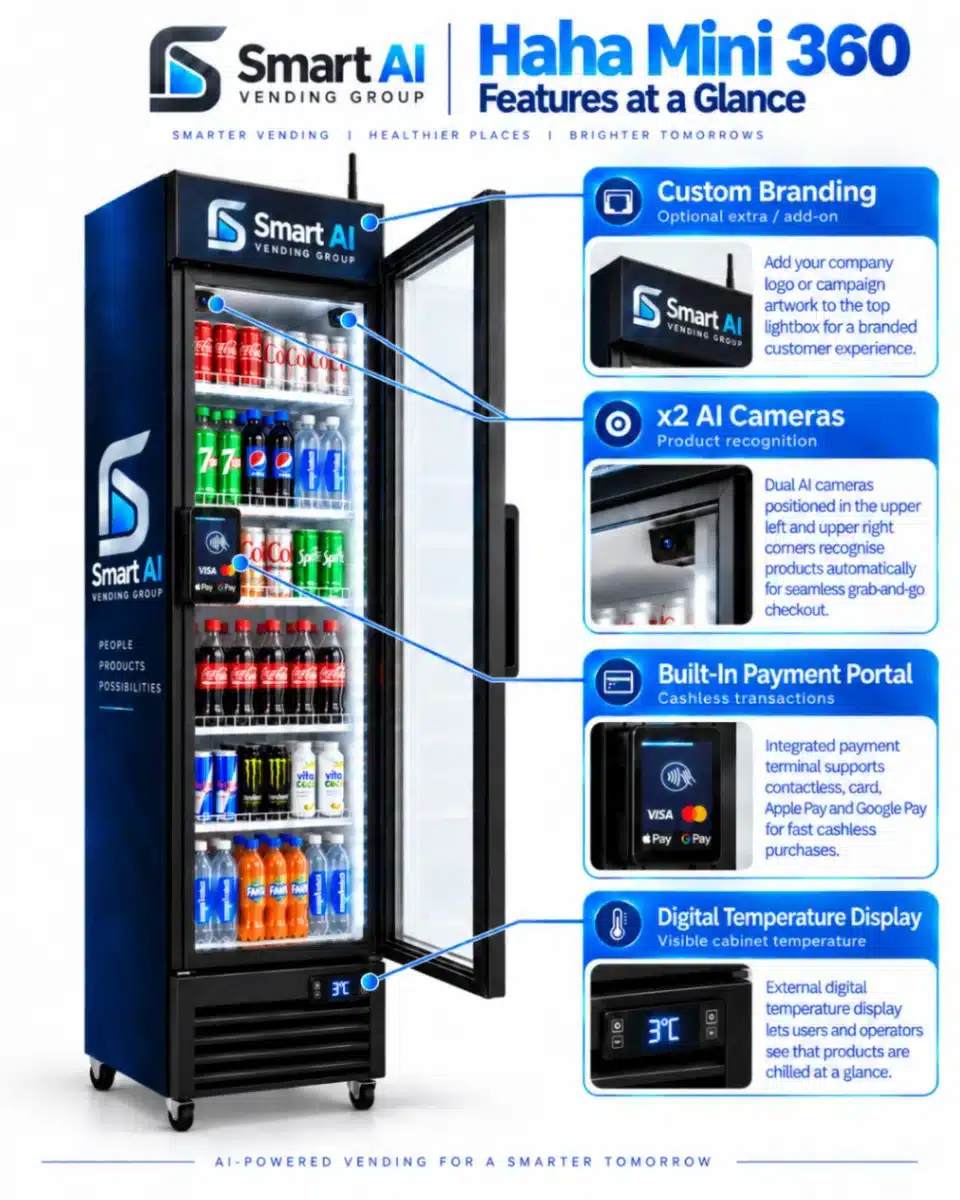
Most smart AI vending machines follow the same five-step journey, whichever brand you choose:
- Tap to unlock. The customer taps a contactless card, phone wallet or scans a QR code. The payment terminal places a temporary pre-authorisation on the card and the door lock releases.
- Open and browse. Unlike a traditional machine, the customer opens a glass door and can pick up, compare and return products, just like a shop fridge.
- Take one or more items. Shoppers can take several products in a single visit, which is one reason smart machines can lift basket size.
- Close the door. Closing the door ends the session. The machine compares the shelves before and after the visit.
- Automatic charge and receipt. The system calculates the basket, charges the card for the actual items taken and releases the rest of the pre-authorisation. Many systems can show or send a digital receipt.
The Recognition Technology Inside a Smart Vending Machine
The key question is how the machine knows what you took. There are three main approaches, and each has trade-offs.
AI Vision (Camera Recognition)
Cameras inside the cabinet record the shelves during each session. Computer-vision models, trained on images of each product, identify which items were picked up and which were put back. AI vision is flexible because products do not need to sit on a dedicated sensor, and it can cope with a wide mix of packaging. It does need products to be visually distinct and loaded in a sensible layout, and new products usually need to be added to the recognition library before they go on sale.
Weight Sensors (Gravity Recognition)
Each shelf or lane sits on a load cell. When weight leaves a shelf, the system matches the change against the known weight of products on that shelf. Weight systems are reliable for consistent items such as cans and bottles, but they work best when products on a single shelf have clearly different weights.
Hybrid Vision and Weight Systems
Many current machines combine both. The cameras say what was taken, and the weight data confirms it. This ‘fusion’ approach tends to reduce disputed transactions and suits sites that sell a mix of drinks, snacks and fresh food.
| Technology | How it identifies items | Best for | Things to consider |
|---|---|---|---|
| AI vision | Cameras and trained recognition models | Mixed ranges, fresh food, frequent range changes | Products need adding to the image library; layout matters |
| Weight sensors | Load cells measure weight removed per shelf | Uniform items like drinks and packaged snacks | Similar-weight items on one shelf can be harder to tell apart |
| Hybrid | Vision plus weight cross-check | High-traffic sites wanting fewer disputes | Typically more hardware inside the cabinet |
RFID tagging is a fourth option you may see mentioned, where each product carries a small tag. It is accurate but adds a per-item tag cost and labelling labour, so it is less common for snack and drink vending.
How Payment Works on a Cashless Smart Vending Machine
Smart vending machines are almost always cashless. A card reader or app handles payment in three stages:
- Pre-authorisation: a temporary hold is placed on the card when the door unlocks.
- Capture: after the door closes, only the value of the items taken is charged.
- Release: the unused part of the hold is released by the customer’s bank. How quickly that appears depends on the card issuer.
Because there is no cash, there are no coin mechanisms to jam, no cash collections and less reason for break-ins. If you are comparing payment set-ups more widely, our guide to self-service payment kiosks explains where a separate kiosk fits alongside vending.
Telemetry: How Operators See Stock and Sales Remotely
Every smart machine is connected, usually over 4G or Wi-Fi. That connection sends data to a cloud platform and a mobile app, where operators can:
- see live stock levels for each product and shelf;
- review orders, including video or sensor evidence for any disputed sale;
- change prices and promotions remotely;
- monitor fridge or freezer temperature and get alerts;
- plan restocking routes based on what has actually sold.
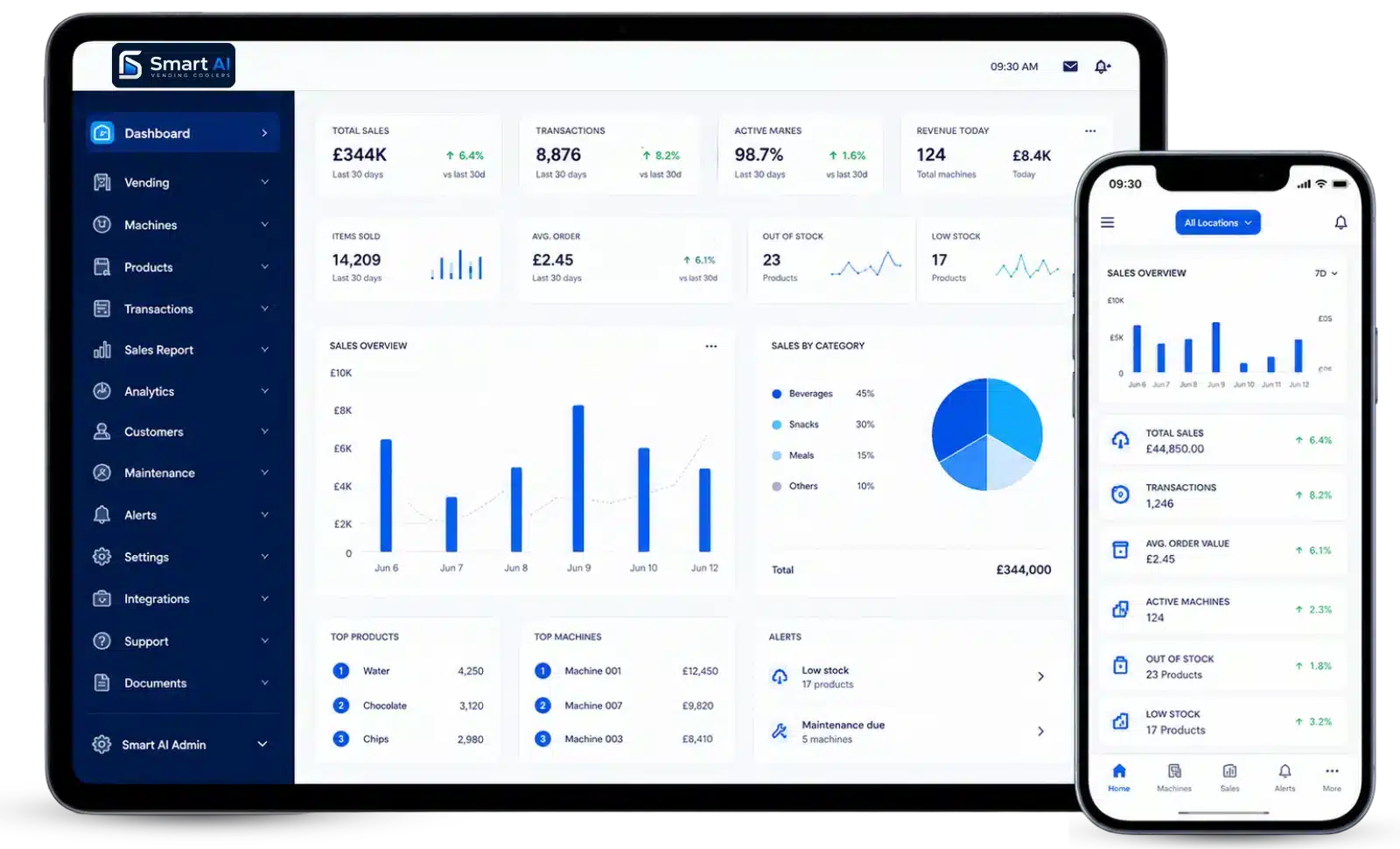
This is where much of the commercial value sits. Instead of visiting every machine on a fixed schedule, an operator can restock when stock is low, carry the right products and spot slow sellers early.
Smart AI Vending vs a Traditional Spiral Vending Machine
| Feature | Smart AI vending machine | Traditional spiral machine |
|---|---|---|
| Shopping experience | Open door, pick up and compare products | Choose a code, item drops into a tray |
| Items per visit | Several items in one transaction | Usually one item per vend |
| Product range | Bottles, snacks, fresh food, irregular shapes | Limited to items that fit spirals |
| Payment | Cashless card, phone wallet or app | Often cash plus card reader |
| Stock visibility | Live, per product, in an app | Often manual checks unless retrofitted |
| Common faults | Network or recognition exceptions | Jams, stuck items, coin mechanism faults |
Want a deeper look at fridge-style formats? See our smart stores page, which covers the cooler and cabinet models we supply.
Where Smart AI Vending Machines Work Best
Smart vending suits sites where people want quick access to food and drink at any hour and where there is a reasonable level of supervision or controlled access. Common examples include:
- offices and co-working spaces;
- hotels, serviced apartments and staff areas;
- universities, colleges and student accommodation;
- hospitals and healthcare waiting areas;
- gyms, leisure centres and factories with shift workers.
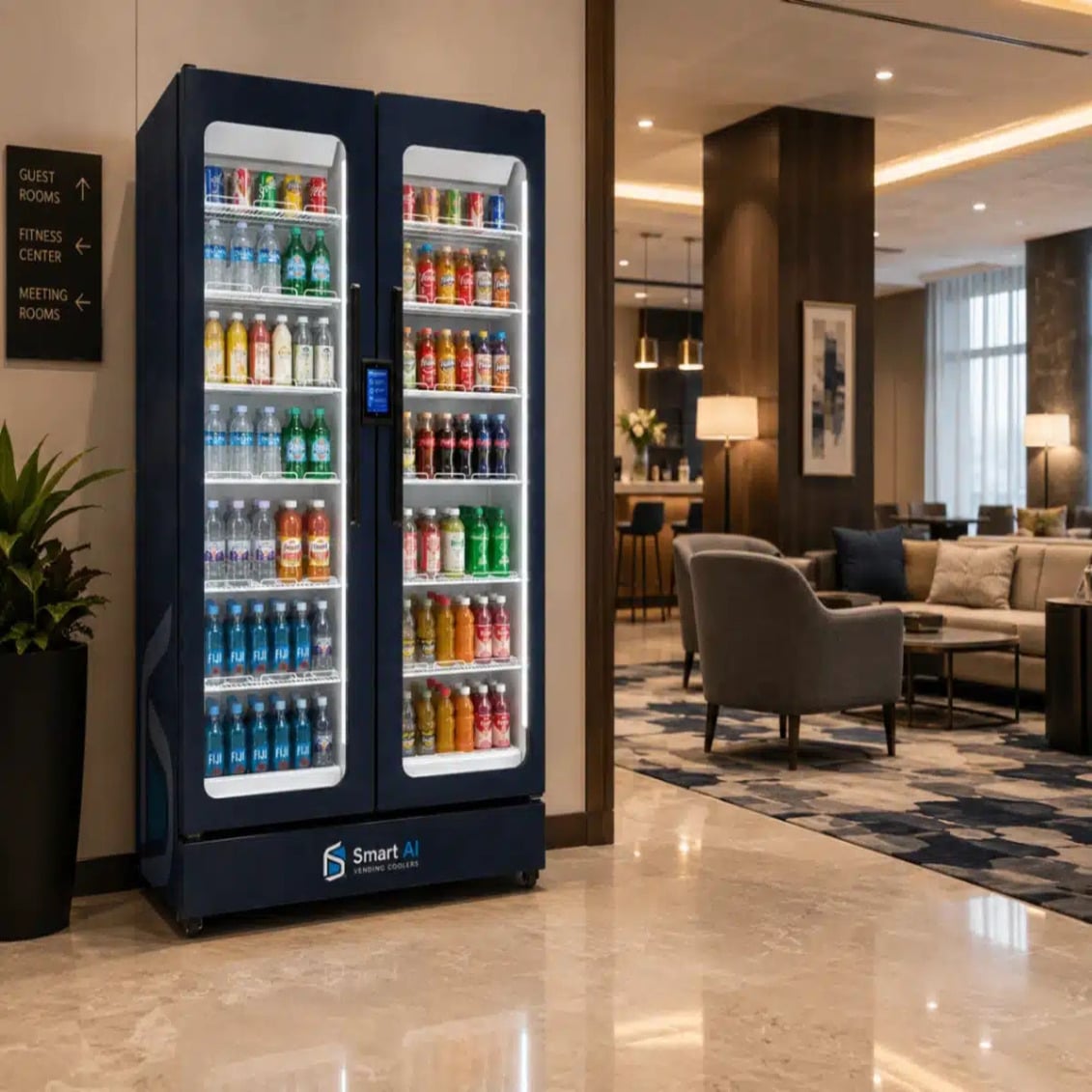
For very open public spaces, discuss security and placement with your supplier first. A machine bolted in a well-lit, monitored spot will generally perform better than one in a quiet corridor.
What to Check Before You Buy a Smart Vending Machine
- Recognition method: vision, weight or hybrid, and how new products are added.
- Connectivity: whether the site has reliable Wi-Fi or mobile signal at the planned location.
- Power: a suitable socket close to the machine; refrigerated models need a dedicated supply.
- Software: dashboard features, user access and any ongoing licence or service fees.
- Payment provider: supported cards and wallets, and the transaction fees involved.
- Support and warranty: what is covered and how faults are handled. Our warranty and technical support page explains our approach.
- Add-ons: branding wraps, card readers, stands and other vending machine accessories.
You will find more buying guides and explainers in our resources hub.
Frequently Asked Questions
Do smart vending machines need Wi-Fi?
They need an internet connection to authorise payments and send data. Most use 4G with a SIM, Wi-Fi or a wired connection. A quick signal check at the planned spot is worth doing before installation.
What happens if someone takes an item and puts it back?
The recognition system compares the shelves before and after the door closes, so items returned to the shelf are not charged. Hybrid systems use both vision and weight to confirm this.
Can smart vending machines sell fresh food?
Yes. Refrigerated smart coolers are often used for sandwiches, salads and dairy, and some models are freezers for ice cream and frozen meals. Temperature monitoring helps with food-safety checks.
Are smart vending machines secure?
The door only unlocks after a valid payment authorisation, and each session is recorded. Placing the machine in a monitored, well-lit area adds further protection.
How do customers get a refund if they are overcharged?
Operators can review the order record in the management app and issue a refund where a charge is wrong. Ask your supplier how disputes are handled on the model you choose.
The Bottom Line
Smart AI vending machines replace coils and keypads with an open-door, tap-and-go experience. Cameras and sensors identify each item, payment is fully cashless, and live data makes restocking far more efficient. If you would like advice on which model and recognition method fits your site, our UK team is happy to help.
Find the Right Smart Vending Machine for Your Site
Tell us about your location, footfall and product range, and we will recommend suitable smart AI vending options.