
Are vending machines profitable in the UK? They can be, but profit is not automatic. A vending machine makes money when the margin on each sale, multiplied by sales volume, comfortably covers the cost of the machine, stock, site commission, payment fees, energy and restocking time. The biggest single factor is location: a well-placed machine in a busy site can perform very differently from the same machine in a quiet corridor.
This guide explains what drives vending profitability in the UK and how smart AI vending machines can change the numbers. We have not included invented earnings figures; instead, we show you how to work out the numbers for your own sites.
Key Takeaways
- Profit depends on location, product margin, volume and running costs.
- Site commission, payment fees and restocking labour are major cost lines.
- Smart AI vending can lift basket size and cut wasted restocking trips.
- Live sales data helps you drop slow sellers and price confidently.
- Always model profit per machine before you commit.
Are Vending Machines Profitable in the UK? The Key Factors
1. Location and Footfall
Busy sites with a captive audience, such as offices, factories, hospitals, gyms and student accommodation, tend to perform best, especially where there are few nearby shops or where people work outside normal hours. Before placing a machine, ask the host how many people use the space and when.
2. Product Mix and Margin
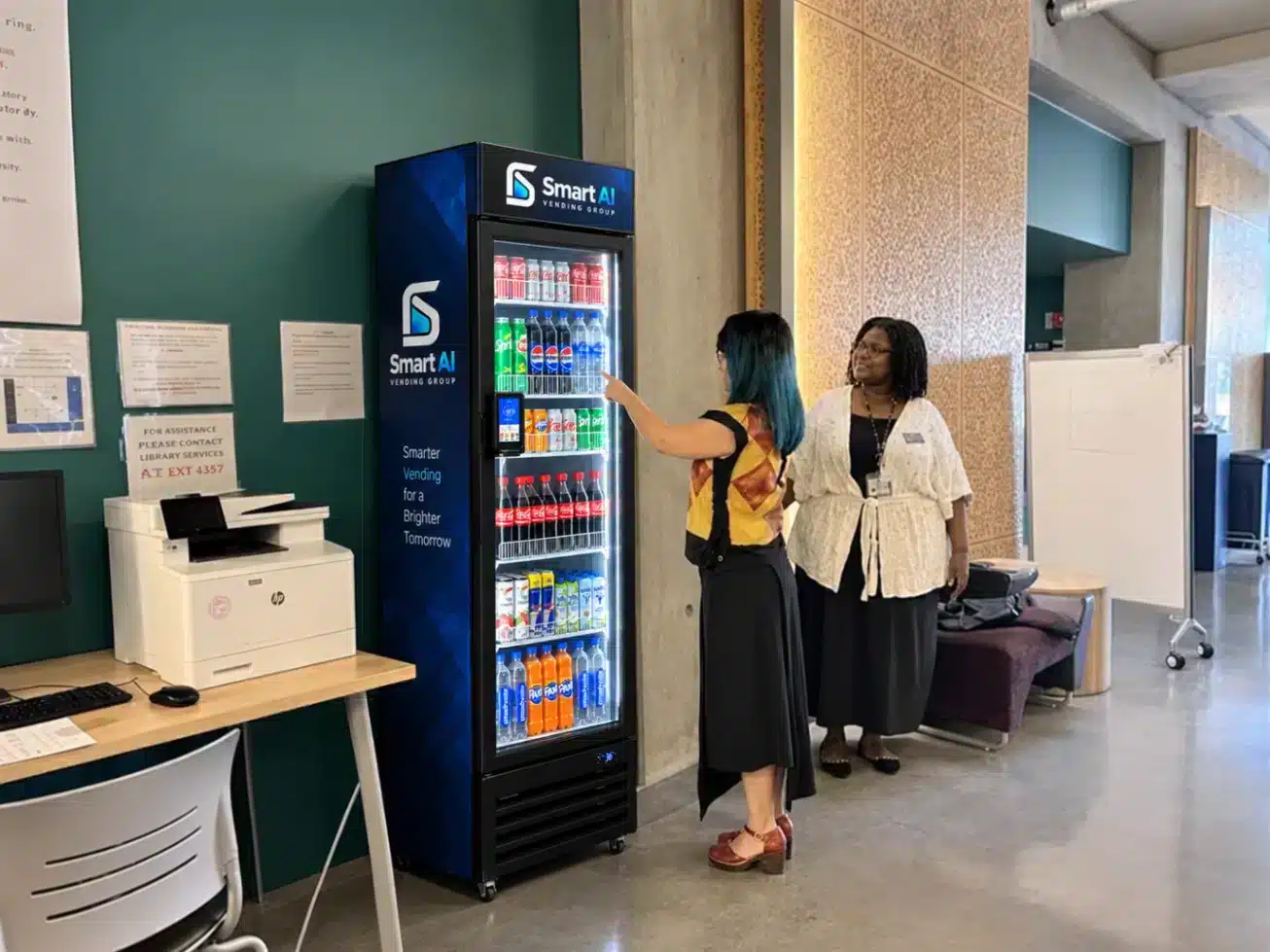
Margin is the difference between your buying price and the selling price. Branded drinks and snacks are popular but often carry tighter margins, while fresh food and specialist ranges, such as confectionery in candy vending machines, can offer different margin profiles. Test, measure and adjust the range.
3. Site Commission
Many hosts take a commission on sales or charge a fixed fee in return for space and power. This can significantly affect profit, so agree terms in writing.
4. Running Costs
- stock and wastage;
- restocking labour and travel;
- payment processing fees;
- software and connectivity fees;
- electricity, especially for chilled and frozen machines;
- servicing, repairs and insurance.
5. Machine Cost and Finance
Whether you buy outright or finance, the machine’s cost needs to be recovered from profit. Our guide to smart vending machine cost explains what goes into a quote.
A Simple Way to Estimate Vending Profit
You can model profit per machine with a straightforward monthly calculation. Use your own figures from supplier price lists and the host’s footfall estimates:
| Line | How to calculate it |
|---|---|
| Revenue | Average sales per day × average basket value × trading days |
| Cost of goods | Revenue × your average cost-of-goods percentage |
| Gross profit | Revenue − cost of goods |
| Operating costs | Commission + payment fees + software + connectivity + energy + restocking + servicing |
| Net profit before machine cost | Gross profit − operating costs |
| Payback | Machine cost ÷ monthly net profit |
Run the model with cautious, expected and optimistic sales figures. If the cautious case does not work, reconsider the location or the range.
How Smart AI Vending Machines Improve Profitability
Smart AI vending machines do not guarantee profit, but they change several cost and revenue lines in your favour:
- Larger baskets: open-door shopping lets customers take several items in one visit.
- Wider range: fresh food and irregular items can be sold, opening new margin opportunities.
- Smarter restocking: live stock data means fewer wasted trips and fewer empty shelves.
- No cash handling: no coin collections, counting or banking.
- Fewer breakdowns: no spirals or coin mechanisms to jam.
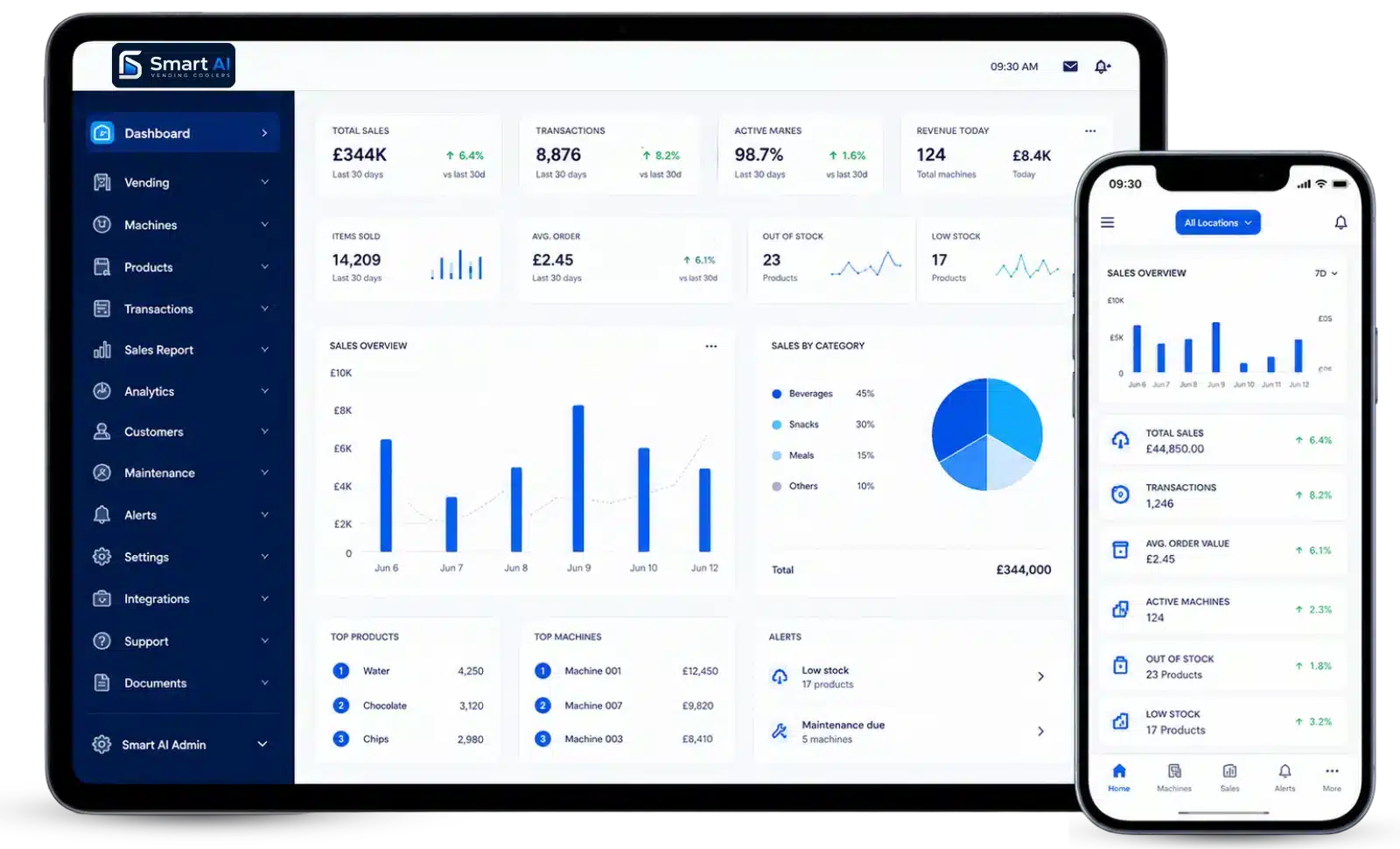
- Pricing control: change prices remotely and test promotions.
Traditional vs Smart Vending: Profit Drivers Compared
| Profit driver | Traditional vending | Smart AI vending |
|---|---|---|
| Items per sale | Usually one | Often several |
| Range flexibility | Limited by spirals | Wide, including fresh |
| Restocking | Fixed schedule or manual checks | Data-led, as needed |
| Cash handling | Often required | None |
| Upfront cost | Generally lower | Generally higher |
Starting a Vending Machine Business in the UK
- Research sites: approach businesses with steady footfall and limited food options.
- Pick the right machine: match the format to the site; see our smart stores range.
- Register and insure: consider business registration, public liability insurance and, for food, local authority food business registration where required.
- Plan your logistics: stock sourcing, storage and a realistic restocking route.
- Track performance: review sales by product and site every month.
Food rules and registration requirements can change, so check current guidance from the Food Standards Agency and your local council before you start selling food.
Common Mistakes That Hurt Vending Profit
- choosing a site based on availability rather than footfall;
- agreeing a high commission before testing sales;
- stocking a range nobody asked for;
- underestimating restocking time and travel;
- ignoring energy costs on chilled machines;
- skipping a warranty or support plan; see our warranty and technical support page.
Choosing Products That Sell
Your range has a big effect on both sales and margin. Start with a balanced mix and let the data guide you:
- Core lines: popular drinks and snacks that people expect to find.
- Healthier options: water, fruit, protein snacks and lower-sugar drinks.
- Fresh food: sandwiches, salads and wraps where a chilled machine and fast restocking allow.
- Local favourites: ask the host and users what they want.
- Seasonal items: ice cream in summer, warming options nearby in winter.
Review performance every month. Products that consistently sell slowly take space from better sellers, so replace them.
Negotiating With Site Hosts
A strong host relationship is the foundation of a profitable vending business. Show the host what they gain: a staff or customer amenity, no cost to them and a reliable service. Be clear on:
- commission or fee structure, and when it is paid;
- who pays for electricity;
- access hours for restocking and servicing;
- how faults and complaints will be handled;
- contract length and notice period.
Start with a trial period if possible, so both sides can see real sales before agreeing long-term terms.
Scaling From One Machine to Many
Once your first machines are profitable, growth is about repeating what works. Cluster sites close together to keep restocking routes efficient, standardise your ranges, and use the smart vending dashboard to manage every machine from one place. Keep a simple spreadsheet of profit per machine so you can move underperforming units to better locations. Our resources hub has more guides to help you plan.
Vending Business Terms Explained
These terms are useful when you model profit or talk to hosts and suppliers:
- Cost of goods: what you pay for the products you sell
- Gross margin: the share of revenue left after cost of goods
- Site commission: the share or fee paid to the host business
- Payback period: the time it takes profit to cover the machine cost
- Telemetry: live machine data used to plan restocking
- Basket value: the average amount spent per transaction
Your Next Steps
If you are ready to move forward, these steps will help you go from research to a working installation with fewer surprises:
- Shortlist sites with steady, captive footfall.
- Build a cautious, expected and optimistic profit model for each.
- Choose machines that match each site’s range and space.
- Agree clear terms with hosts before installation.
- Review sales data monthly and act on it.
Our team can support you at each stage, from the first site survey to installation and aftercare. Browse our shop to see the machines we currently supply, or get in touch for tailored advice.
Managing Risk in a Vending Business
Every business carries risk, and vending is no different. Plan for these common issues before they affect your profit:
- Low sales at a new site: agree a trial period and a clear exit route with the host.
- Breakdowns: choose machines with a solid warranty and responsive support.
- Theft or vandalism: place machines in visible, monitored areas and keep them cashless.
- Stock waste: start fresh ranges small and use sales data to order accurately.
Review these risks every quarter, and keep notes on what happened at each site so future placement decisions are based on your own evidence.
Frequently Asked Questions
How much can a vending machine make in the UK?
It varies enormously by site, range and pricing, so we do not quote typical figures. Use the profit model above with real footfall and pricing for each location.
Is a smart vending machine more profitable than a traditional one?
It can be in the right site, thanks to bigger baskets, a wider range and lower restocking and cash costs. It also costs more upfront, so model both options.
Do I need a licence to run vending machines in the UK?
There is no single vending licence, but if you sell food you may need to register as a food business with your local council. Check current official guidance for your situation.
What sells best in vending machines?
It depends on the audience. Drinks and snacks are staples, while offices and hospitals often respond well to fresh and healthier options. Use sales data to refine your range.
Final Verdict
So, are vending machines profitable in the UK? They can be, when you combine a strong location, a range your audience wants and tight control of running costs. Smart AI vending machines help on several of those fronts. If you are building or growing a vending business, our team can help you choose the right machines.
Planning a Vending Business?
Tell us about your target sites and we will help you choose smart vending machines that fit your business plan.